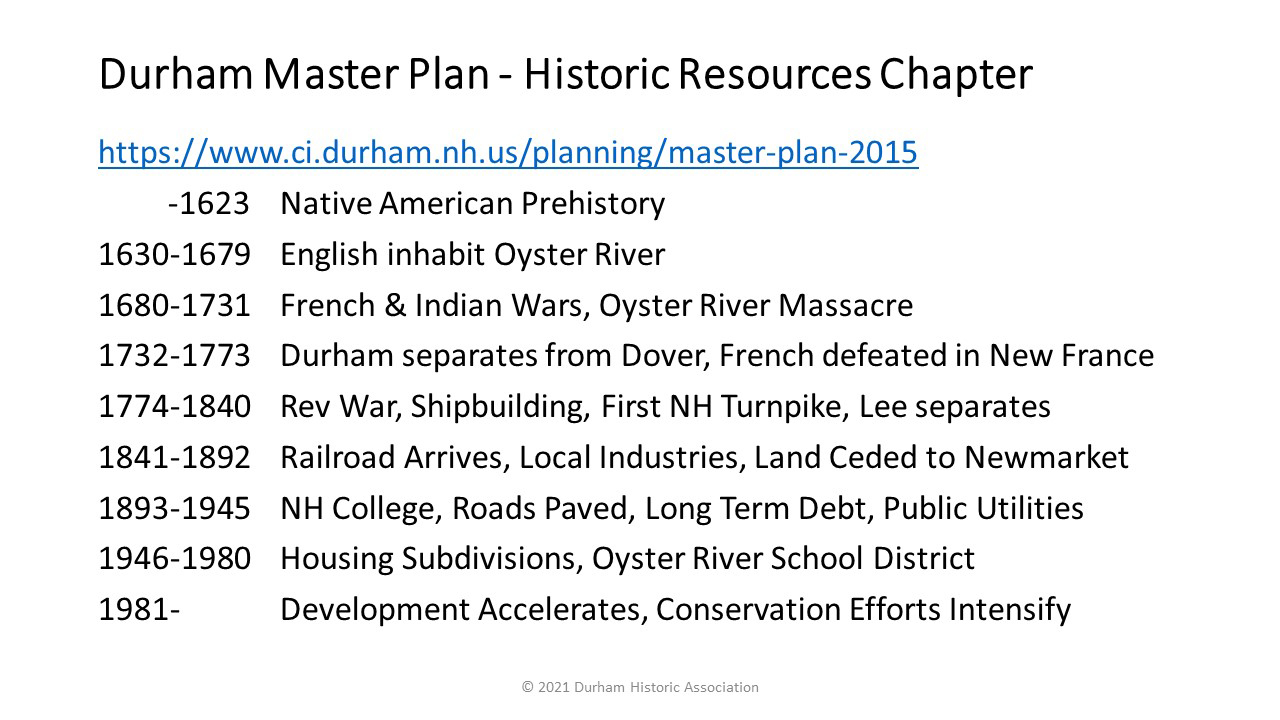

Historical Periods in the Development of Oyster River-Durham
Historical Periods in the Development of Oyster River
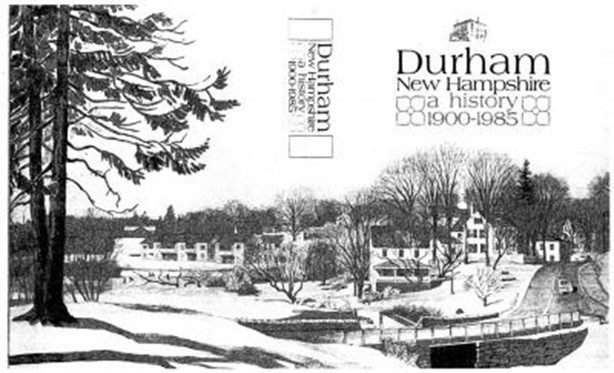
Illustration by John Hatch for the cover of the Durham Historic Association's publication, "Durham, New Hampshire, a History 1900-1985"
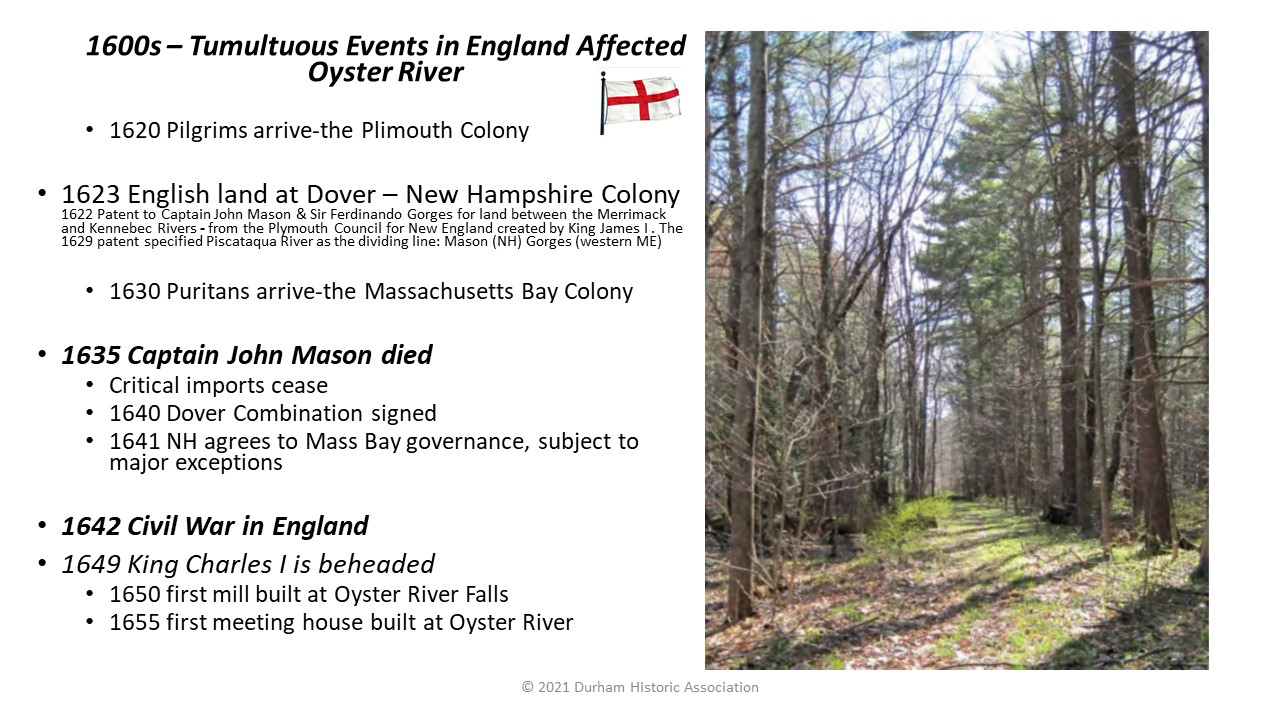
- 1623: English establish the first permanent settlement at Dover Neck
- 1633: English spread out to the nearby tidal shores of Oyster River and are in recognized possession of lands up to the fall line, the village is called Oyster River
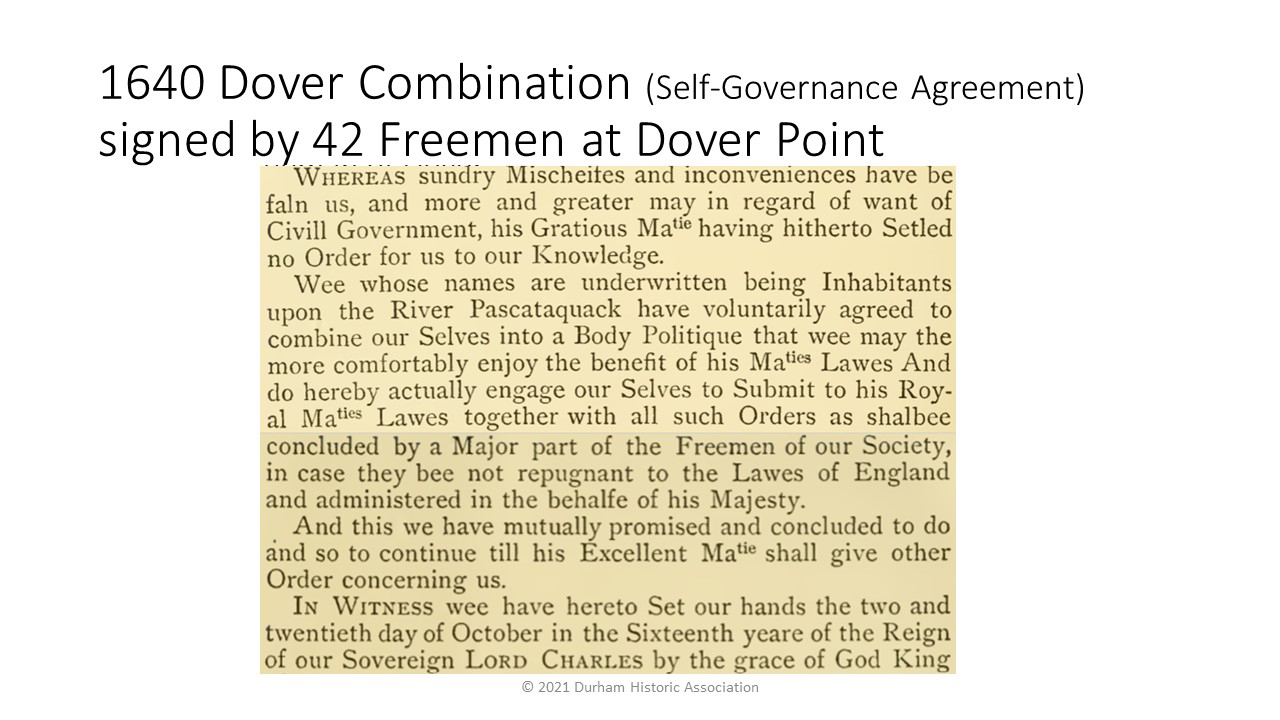
- 1640: The Dover Combination is signed by the freemen of the Dover, including Oyster River
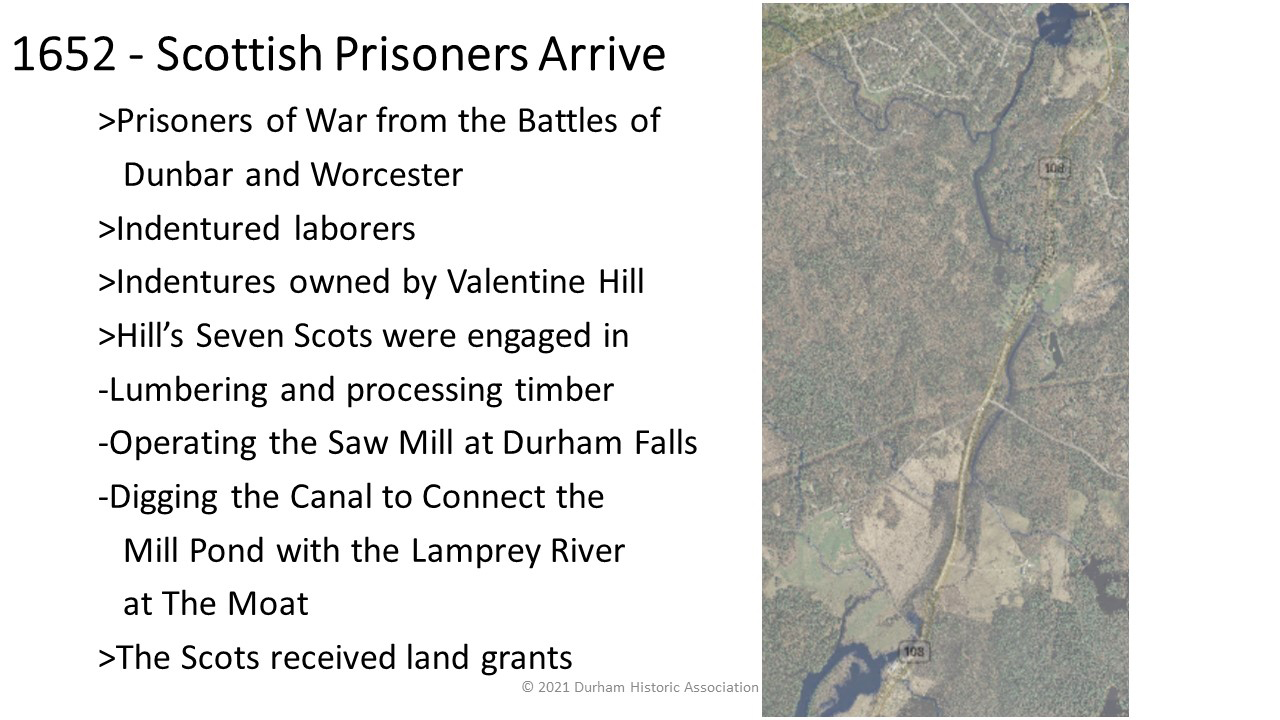
- 1649: Valentine Hill and Thomas Beard are granted the first falls of the Oyster River and construct a dam and saw mill
- 1655: The first Meeting House is built midway up the salt river and taxes paid to allow a separate minister for Oyster River.
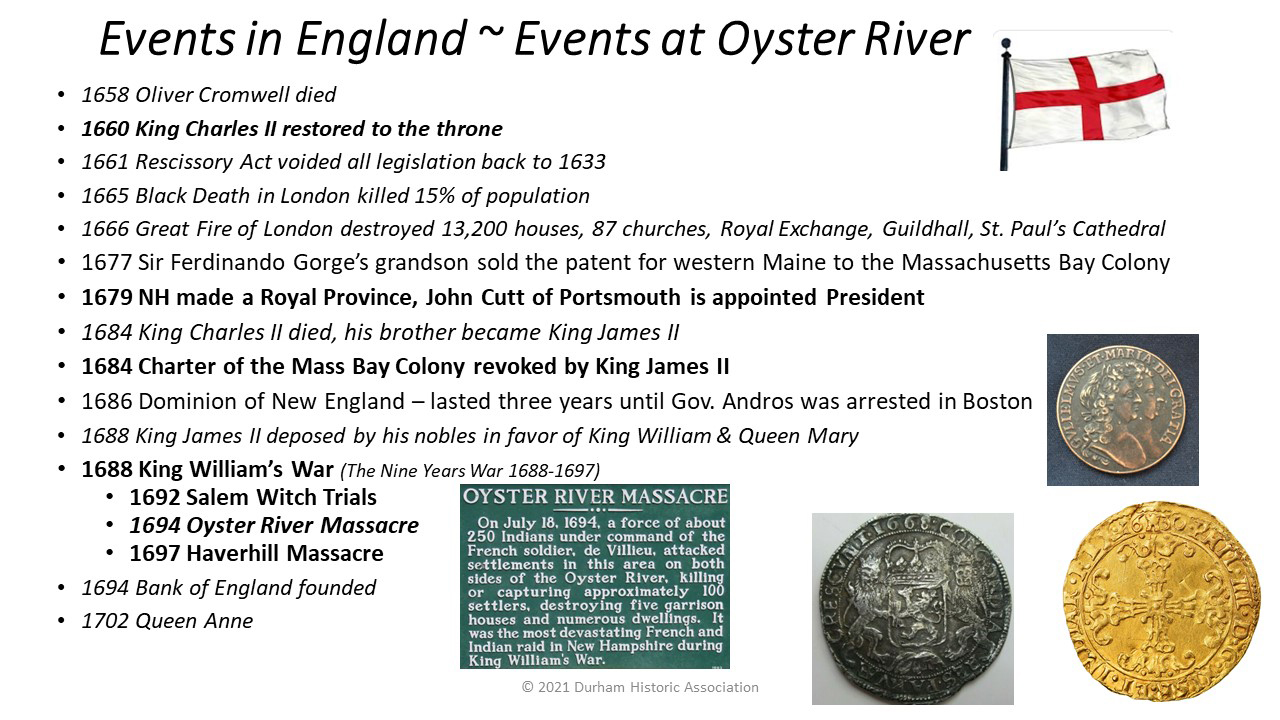
- 1694: Indians from northern Maine, controlled by the French, attack Oyster River to break the Peace Treaty signed in 1693. Crops are destroyed, cattle killed, garrisons and houses plundered and burned, many residents are killed or taken away to be used as slaves or sold to the French
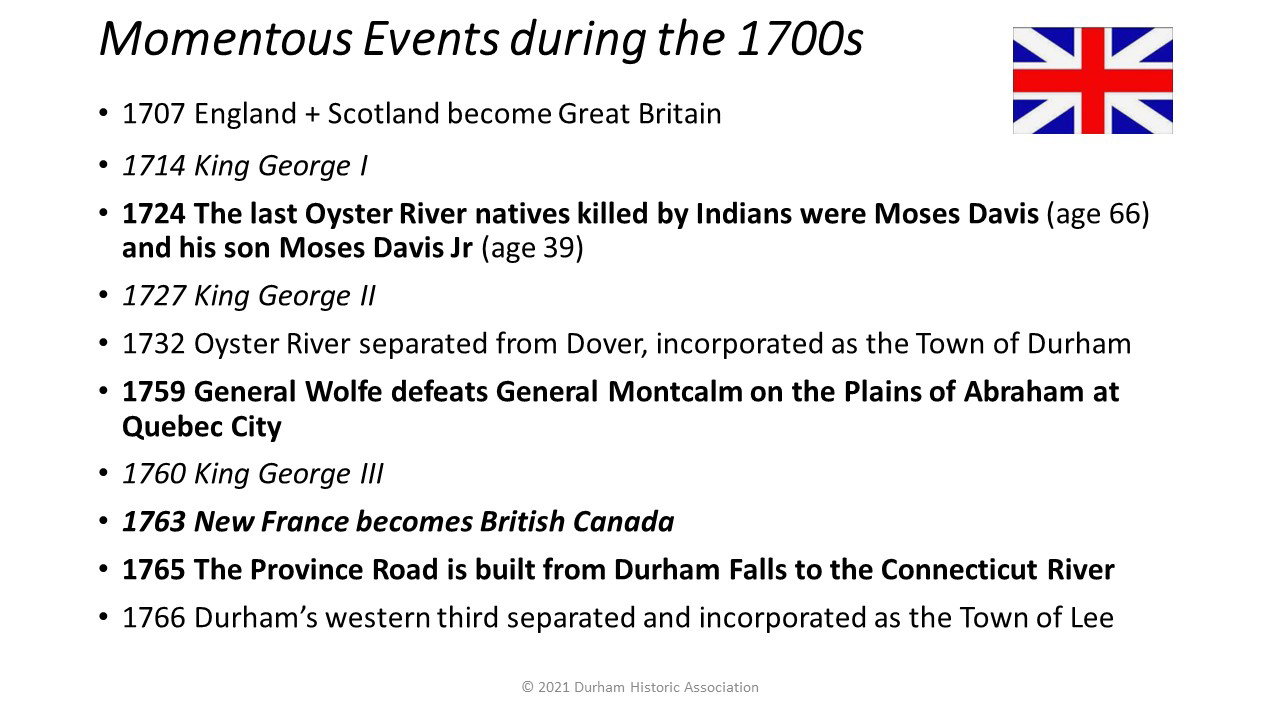
- 1716: Oyster River is granted rights as an independent parish.
- 1732: Oyster River is incorporated as the Town of Durham
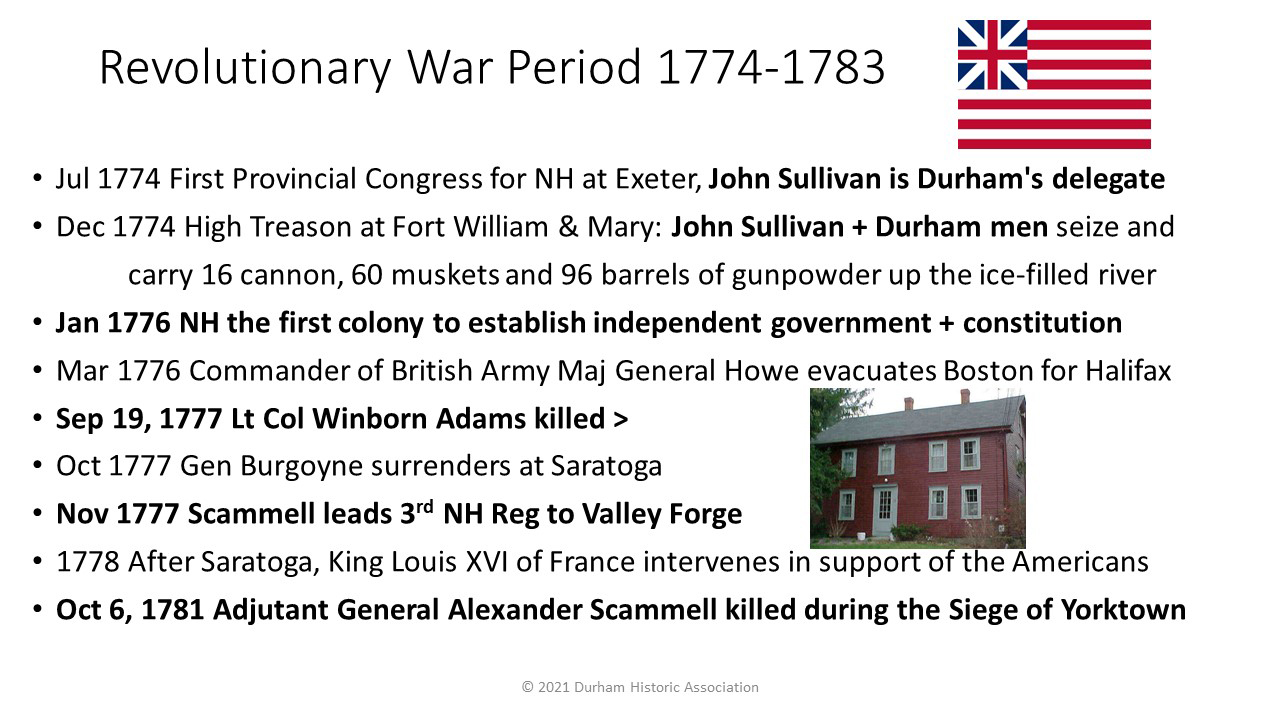
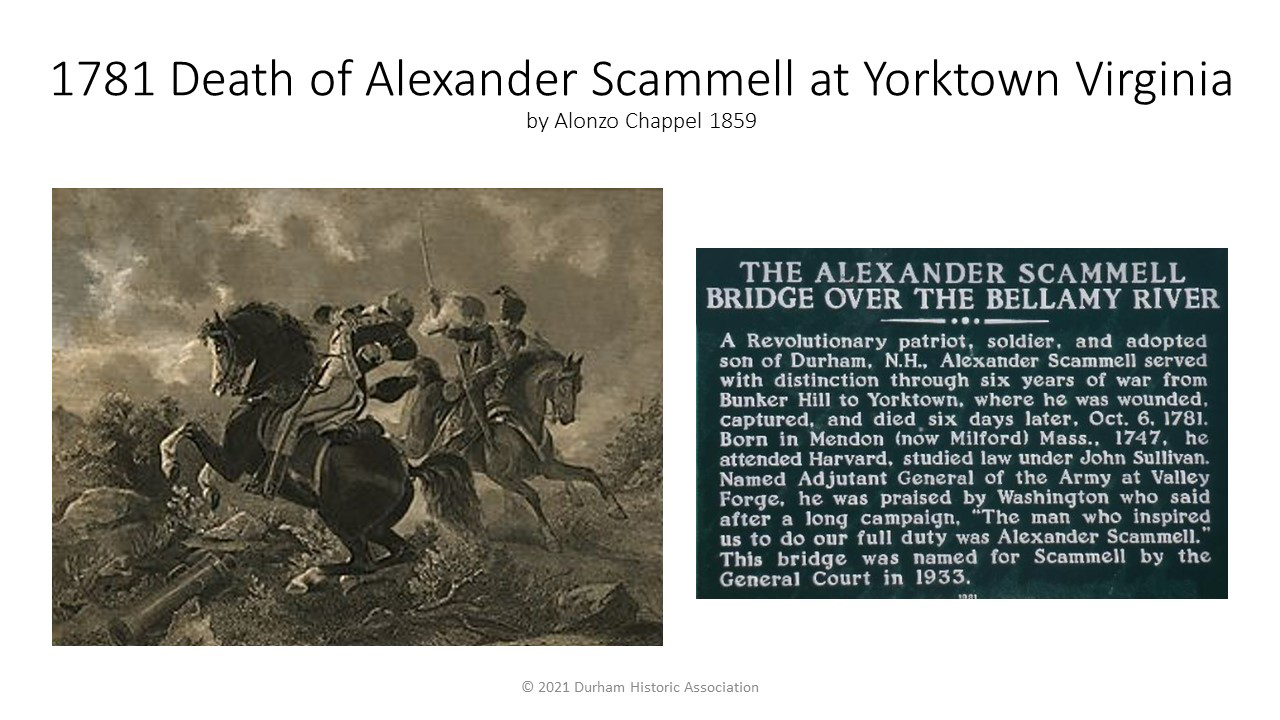
- 1774: In the first acts of treason, Durham men take weapons and gunpowder from Fort William and Mary at Portsmouth harbor by gundalow to the Meeting House at Durham Falls; some of the powder is later used at the Battle of Bunker Hill
- 1776-1829: Seventy four ocean-going vessels (46 of 200-399 tons burden) are produced during the peak years of shipbuilding at the Old Landing
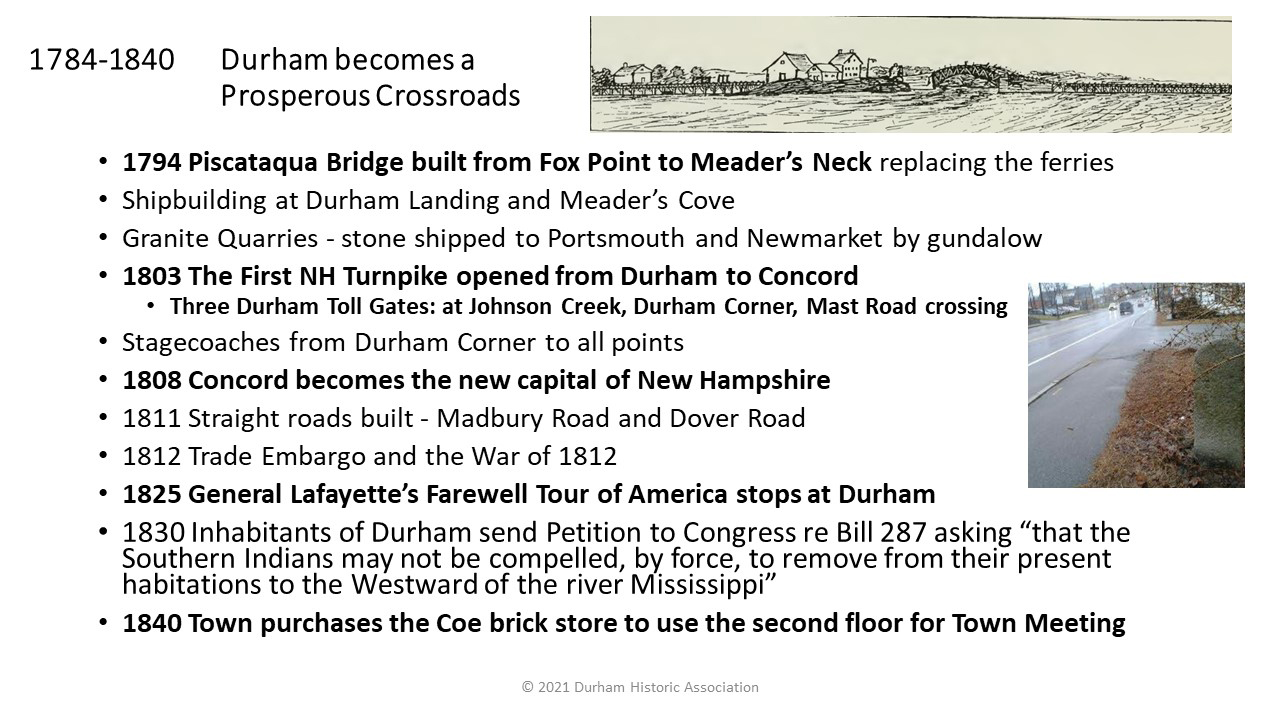
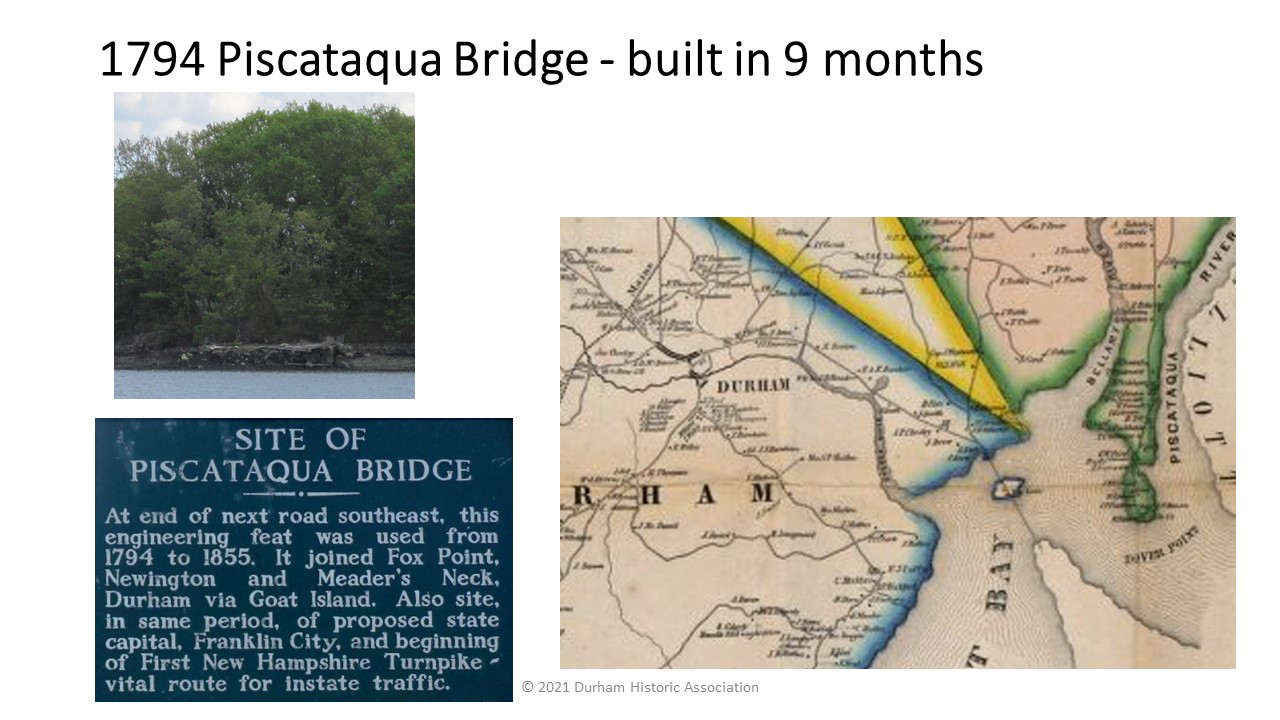
- 1794-1855: Piscataqua Bridge, a 2,363 foot oak wonder, crosses the river to connect Newington with Durham, where the First New Hampshire begins, linking Durham to Concord
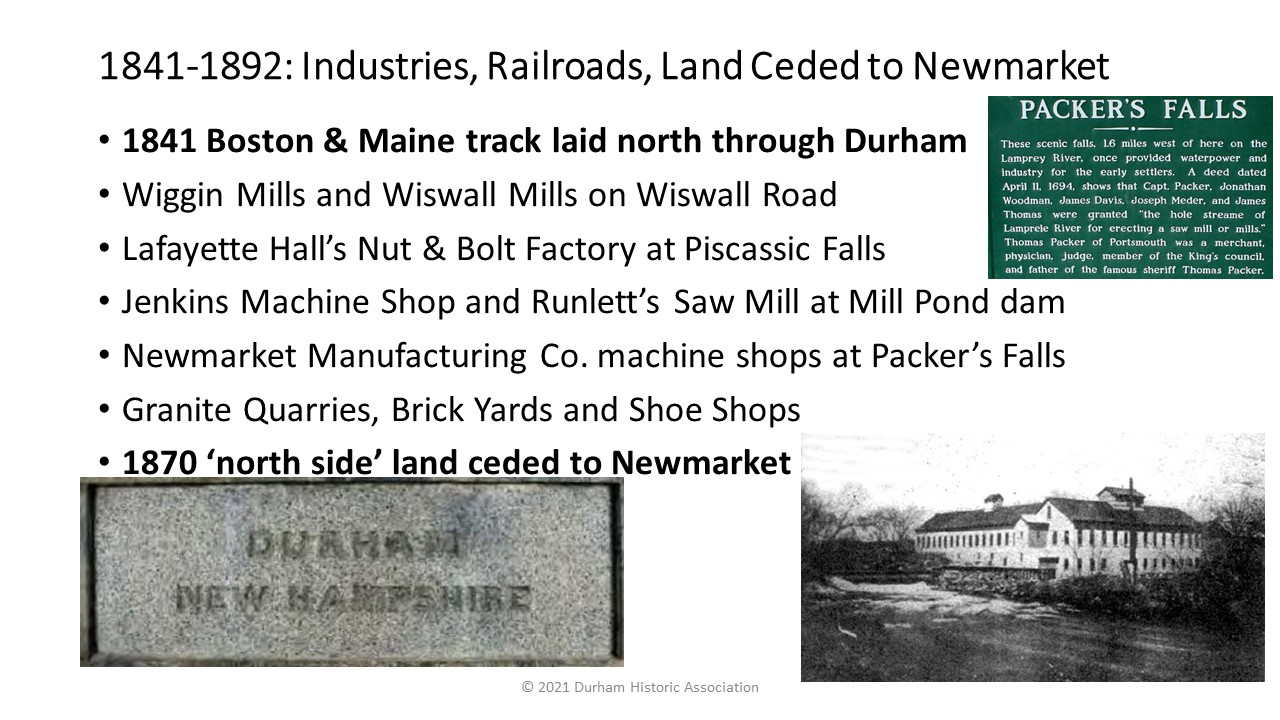
- 1841: The Boston & Maine Railroad is built through Durham, north to Dover
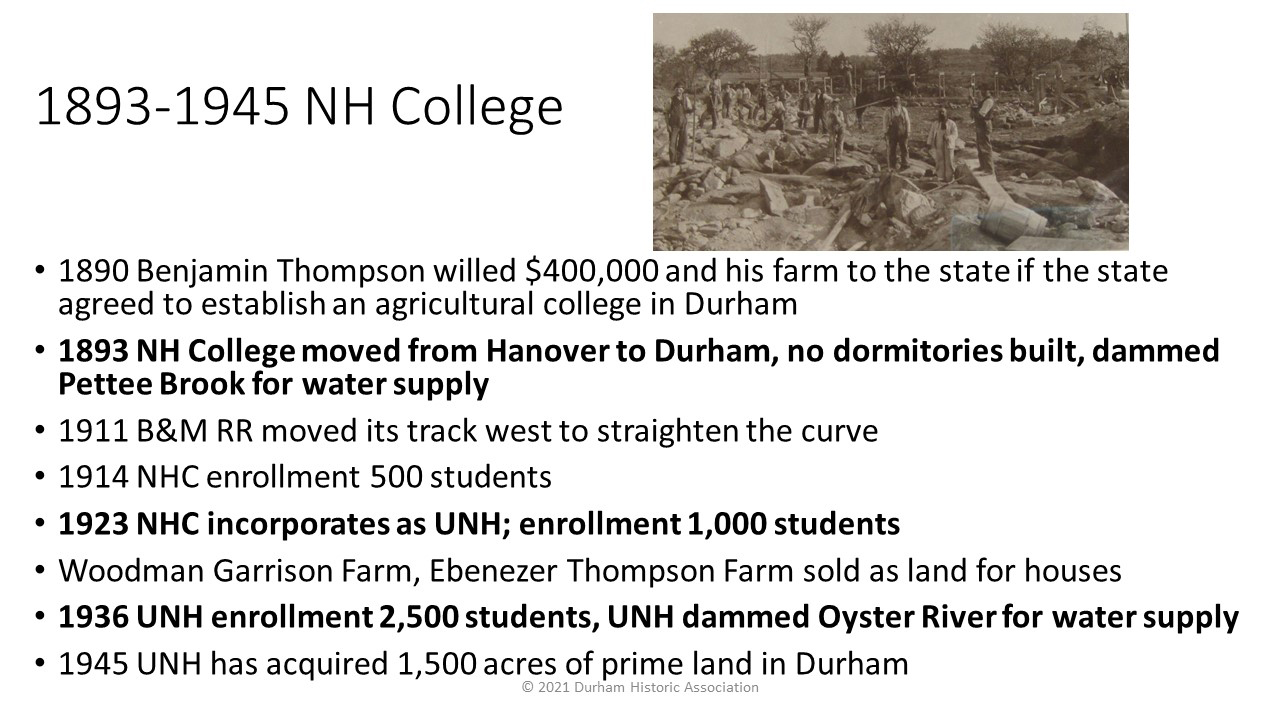
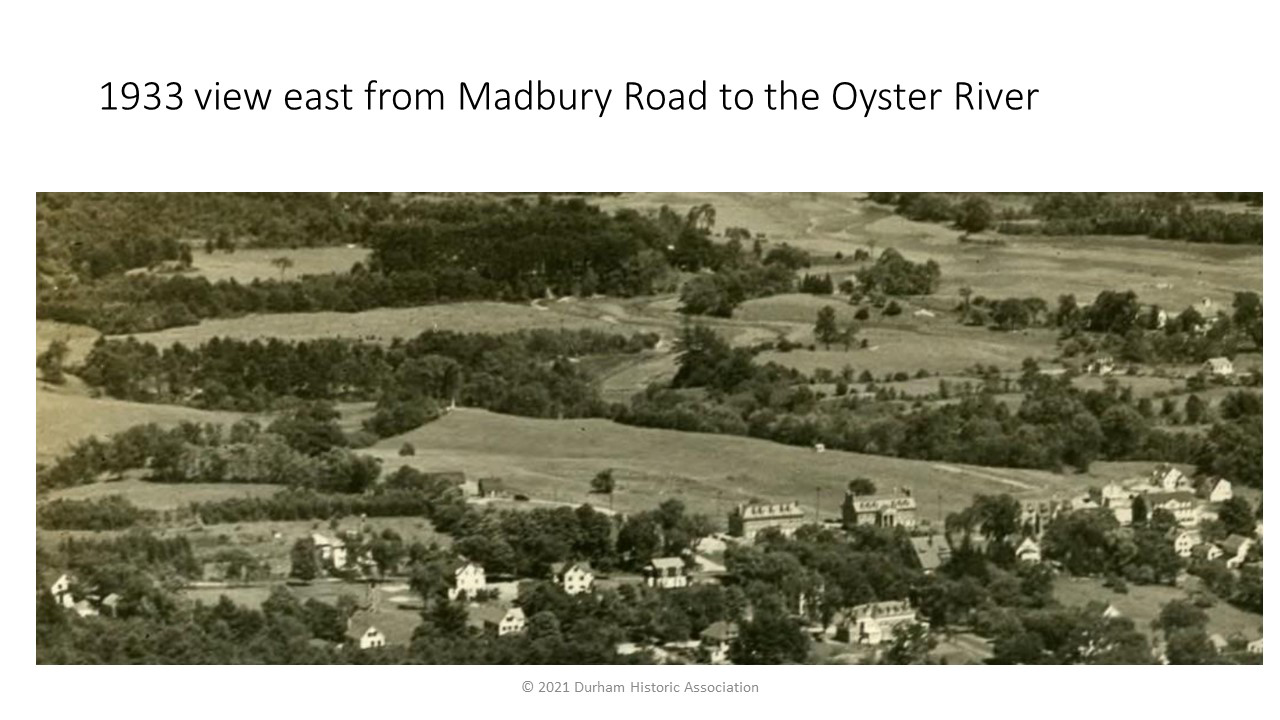
- 1893: New Hampshire College of Agriculture and Mechanic Arts moves from Hanover to Durham on land willed by Durham resident Benjamin Thompson
- 1923: New Hampshire College is incorporated as the University of New Hampshire with the addition of a College of Liberal Arts.
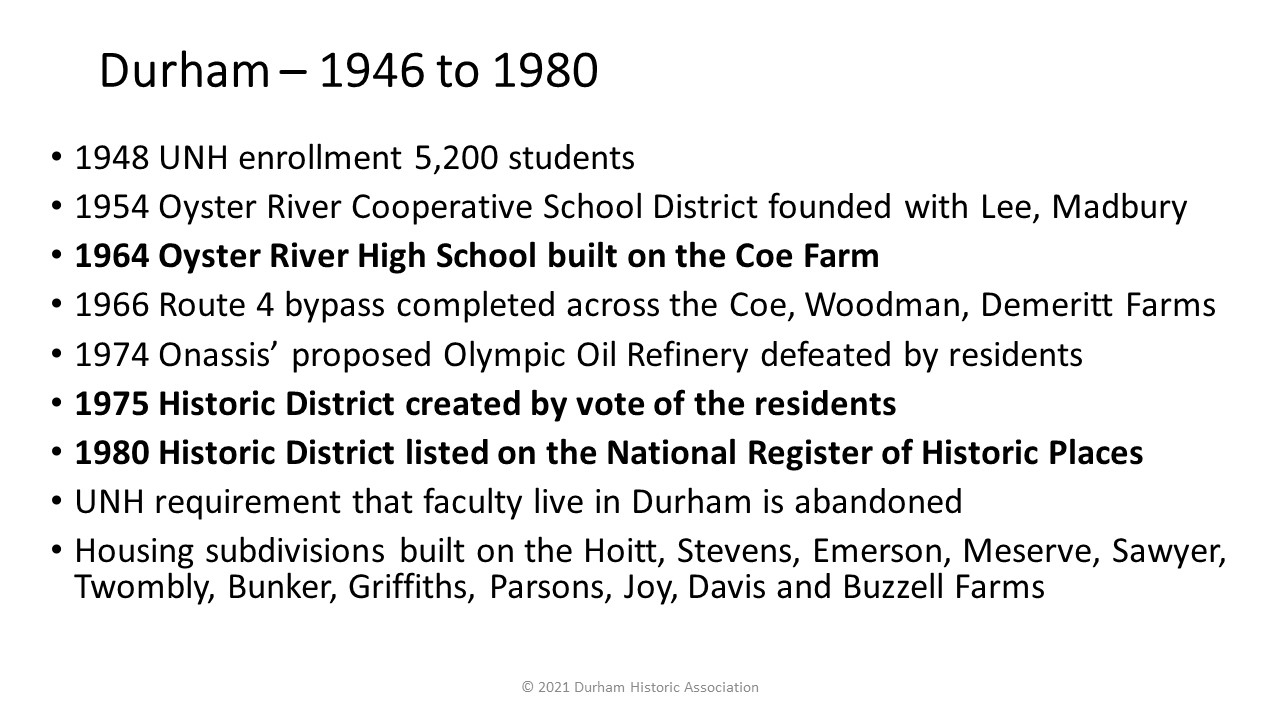
- 1946: An influx of World War II veterans with GI Bill benefits sparks continuing growth of UNH and Durham.
- 1974: Durham Town Meeting votes NO to the Olympic Oil Refinery proposed for Durham Point by Aristotle Onassis
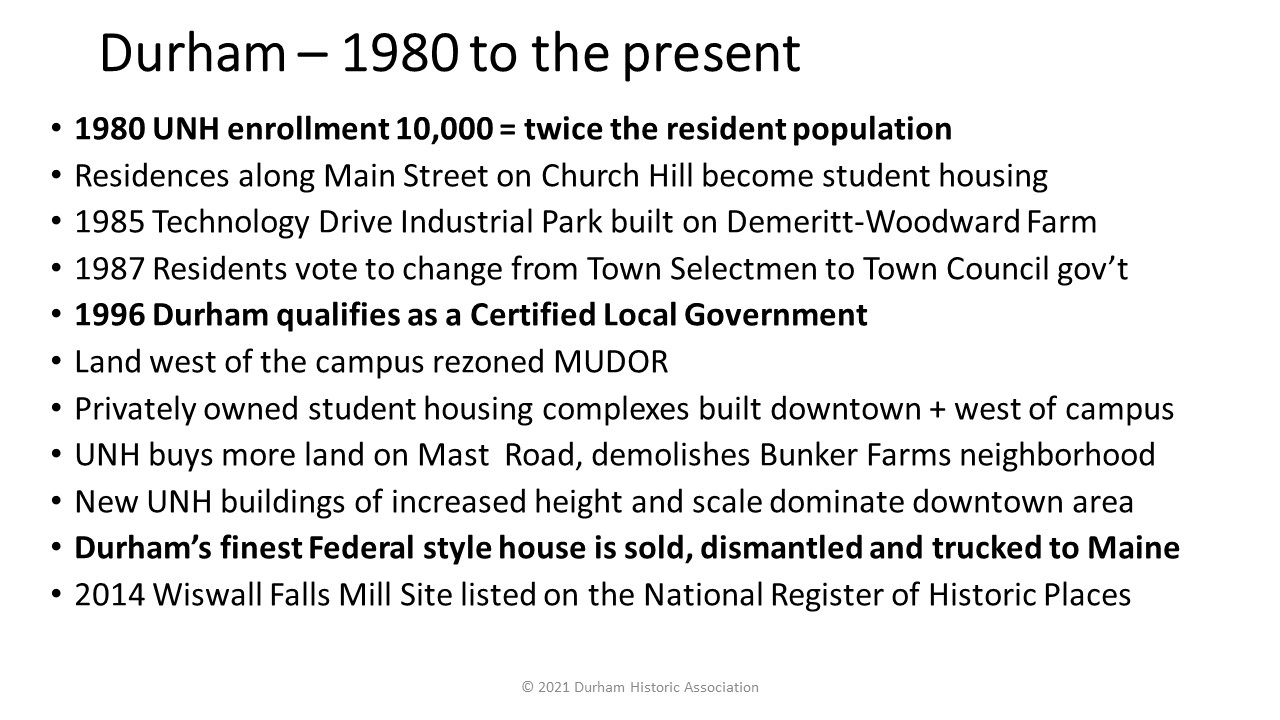
- 1987: After 255 years of Durham Town Meetings and Selectmen, Durham votes YES to change its Town Charter to a Town Council and Administrator form of government
- 2025: Durham has 293 years since incorporation but 392 years since it was first settled
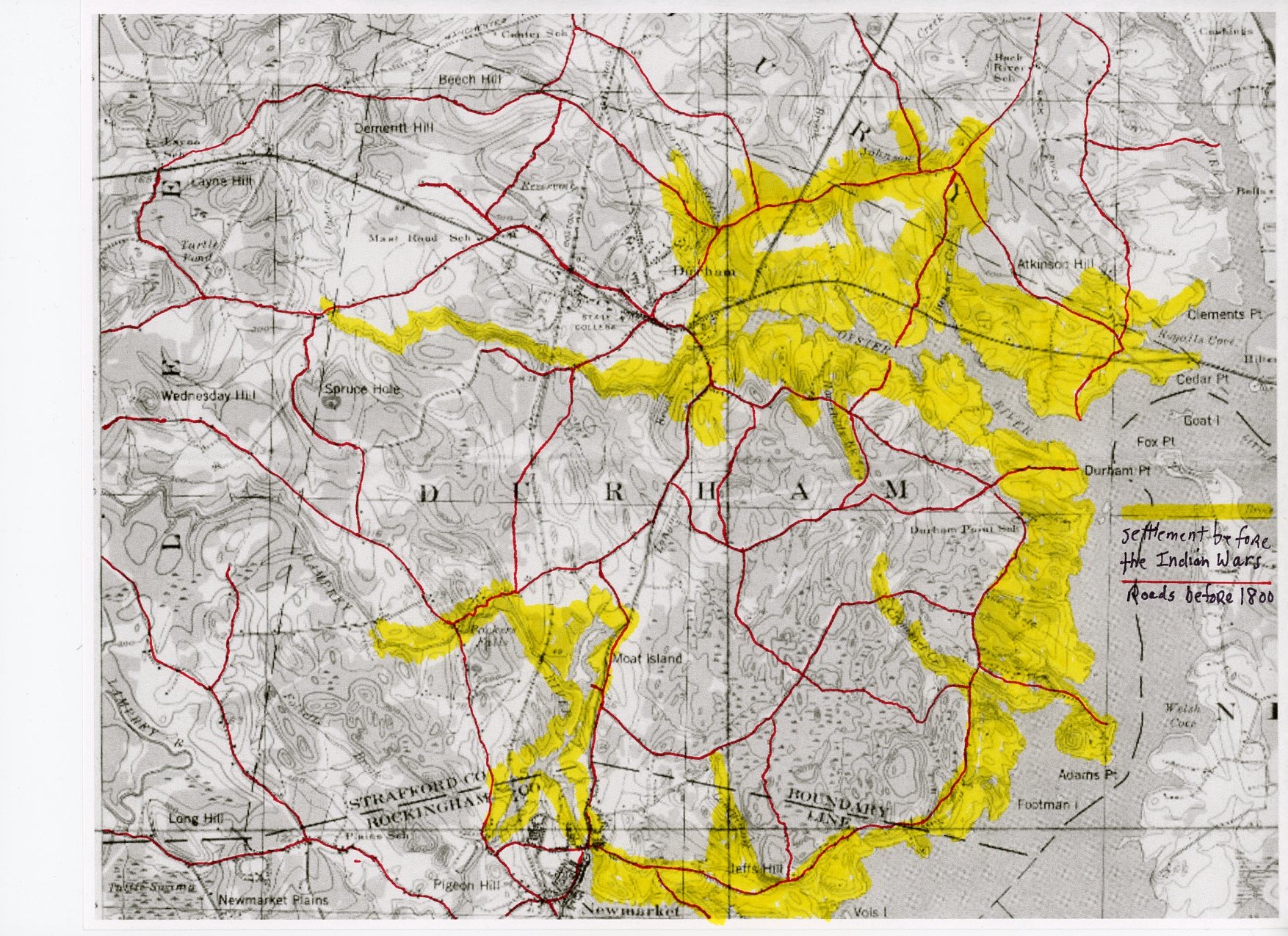
Photo Gallery